Sales
How to follow up with leads without being pushy

Most small businesses do not have a sales team. They have a phone, a WhatsApp, a pile of almost-yes conversations, and a feeling that they should write back. Then a week passes, and writing back feels either too late or too keen. So nobody writes, or somebody writes a message they would hate to receive.
Follow-up is not a funnel. It is courtesy plus memory. This article is a way to do it without becoming a nuisance, and without letting useful enquiries disappear because the week got full.
Answer the first message like a person who wants to be useful
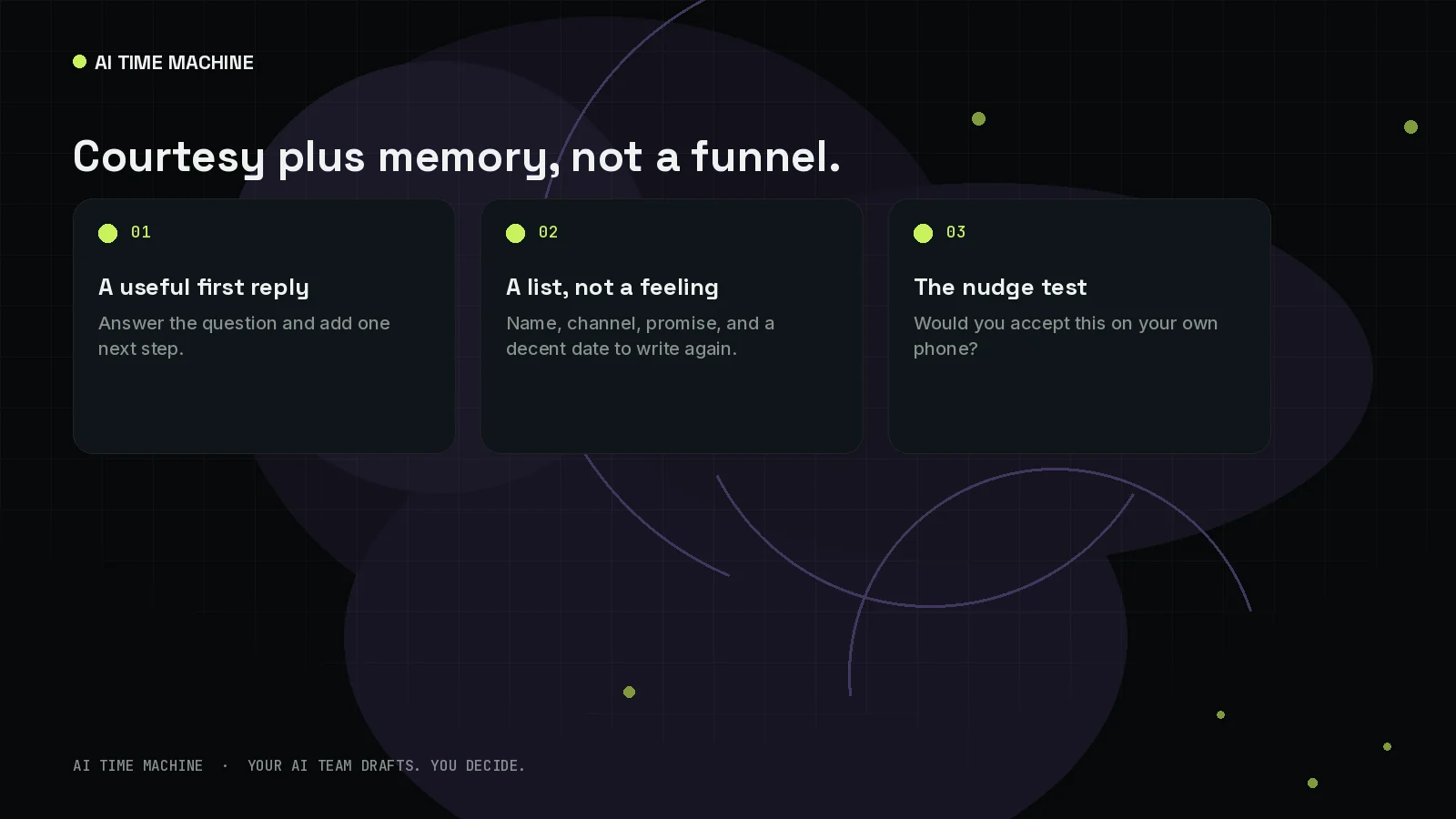
The first reply does more work than any later nudge. It should arrive soon, it should answer the question that was asked, and it should contain one clear next step. If someone asked for a price, give the price or say when you will give it. If they asked whether you can do a job on a date, look at the diary before you type.
A good first reply often includes one question, not four. “Do you want this in the 1 kg pack or the 500 g?” is a question that helps. “Can you tell me more about your requirements so I can revert with a comprehensive proposal?” is a sentence that sounds like it is stalling.
Drafts can help you start. They should not help you hide. If you do not know, say you will find out. If you cannot take the work, say so, and if you can point to someone who can, do that. A clear no is also follow-up. It is follow-up that respects the other person’s time.
Keep a list, not a feeling
“I will remember to write” is not a system. A notebook, a simple list in your phone, or a queue in your tools should hold the person’s name, the channel, what they asked, what you promised, and the date on which it is decent to write again.
The date matters. A quote for a wedding cake may need a note in two days. A question about a product that is out of stock may need a note when the stock actually arrives, not every morning until it does. A person who said “let me think” is not asking for a daily reminder.
If you use agents for lead follow-up, quiet carts, or reminder messages, treat them as clerks for this list. They can draft the next note. They can remind you who you said you would write to today. They cannot know, unless you tell them, that the person already bought in the shop yesterday, or asked to be left alone.
The test for a nudge
Before you approve a follow-up, read it as if it had arrived on your own phone after a long day. Is it short. Is it specific. Does it give the person an easy way to say no, or to say not now. Does it add a fact — the stock is in, the date is still free, the quote is attached again — or does it only apply pressure.
Pressure has a recognisable sound: countdown language, false scarcity, “just circling back” for the third time, or a guilt line about all the work you have already done. Cut those. If you have already written twice and there is no new fact, the next step is often silence.
A useful nudge might be: “The notebooks you asked about are back on the shelf this morning. I can keep one at the counter until Saturday if that helps. If you have gone another way, no need to reply.” That message is easy to accept and easy to decline. That is what not being pushy looks like in writing.
Quotes and almost-sales
A quote should be understandable without you standing next to it. Prices, what is included, what is not, how long the quote holds, and how to accept it. If your prices change with size or travel, say so in numbers, not in “depends.” An agent can turn your price list into that page. You still check every figure, because a wrong quote is a future argument.
For people who almost bought — a cart left half done, a fitting not completed, a form started — one note is usually enough, and it should be kind. They may have been called away. They may have chosen not to buy. Your message should make it easy to return, not hard to ignore.
Do not chain a second and third and fourth cart reminder unless the person has asked you to hold something. Repeated almost-sale nudges are how a shop starts to feel like a marketplace notification, and neighbourhood businesses live on a different kind of trust.

When to stop, and how to stop well
Stopping is part of the job. After a clear first answer, one follow-up with a new fact, and perhaps one last short note, you are done, unless they reply. Write that rule down so you do not improvise it when you are anxious about a quiet week.
If they ask you not to write, stop immediately, and make a note so no future draft can “helpfully” open the thread again. If they buy, the next message is a thank-you or a useful instruction, not a request for a review in the same breath as the receipt.
Sales agents in a careful product will wait for your yes before anything is sent. Use that. A follow-up you almost send and then delete is still useful work: you learned that the note was not ready, or that the person should be left in peace.
A weekly half-hour is enough
Once a week, spend thirty minutes on the list. Cross off anyone who bought, declined, or went quiet past your rule. Add anyone you promised to inform when stock arrived. Draft the few notes that are actually due, approve them, and close the page.
You will not build a complicated pipeline this way, and you do not need one. You will build a reputation as someone who answers, who remembers, and who does not nag. In a small market, that reputation is the asset. Tools can help you keep the memory and the first draft. You keep the manners.
Language that travels across Hindi and English
Many Indian businesses switch languages mid-conversation, and a follow-up should respect the language the person used first. If they wrote in Hindi, do not answer with a stiff English paragraph unless you know they prefer it. If they wrote in English, a sudden burst of informal Hinglish can feel like a different shop.
Drafts are useful here if you tell the tool which language to use, and then read the result as a speaker, not as a spellcheck. Watch for translations that are technically correct and socially off — too formal, too playful, or too much like an office memo. If you are not confident in a language, write a shorter message in the one you are confident in. Clarity is ruder less often than a wrong joke is.
Also be careful with names and honorifics. A wrong name is worse than no name. If you are unsure, use a greeting without a name rather than invent one, and do not let a tool guess.